
Tirzepatide Weight Loss: Mounjaro and Zepbound
Dr. Widian Jubair prescribes tirzepatide under both of its brand names — Mounjaro and Zepbound — as part of a supervised weight management plan at Celestique MD in Aurora.
Not as a prescription handed over at the end of a short telehealth call. As one piece of a plan built on your history, your labs, and a full hour of her attention at every visit.

What tirzepatide is, and how it differs from semaglutide
Tirzepatide is a weekly injection, like semaglutide, and it works on appetite and blood sugar in a broadly similar way. The difference is in how many pathways it acts on.
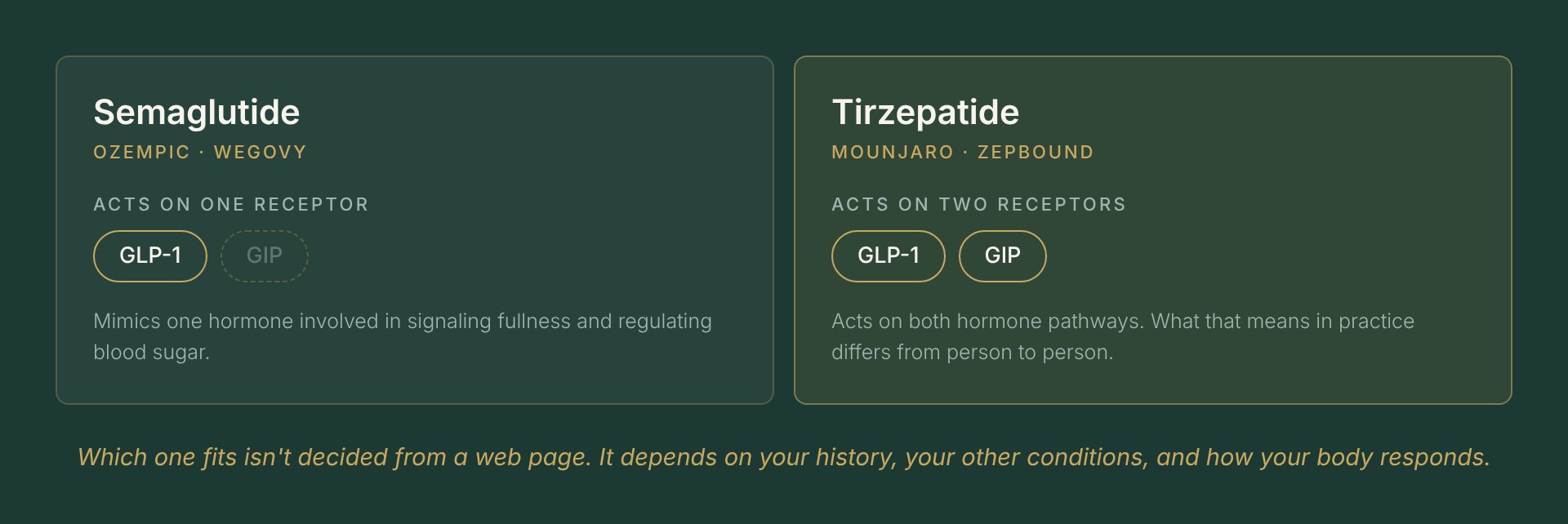
Semaglutide targets one hormone receptor, GLP-1. Tirzepatide targets two — GLP-1 and GIP. Both hormones are involved in how your body signals fullness and manages blood sugar after eating.
What that means in practice differs from person to person. Clinical trials have compared the two directly, and Dr. Jubair can walk you through what that research actually shows and how much of it applies to your situation. Which medication is the better fit depends on your medical history, your other conditions, how your body tolerates each one, and what you’re able to access.
Mounjaro and Zepbound: the same medication, different approvals
Both are tirzepatide, both are made by Eli Lilly, and the difference between them is what the FDA approved each one to treat.
Mounjaro is approved for type 2 diabetes. Zepbound is approved for chronic weight management.
That distinction matters for insurance, for availability, and sometimes for cost. Dr. Jubair will tell you which one fits your diagnosis and why.
Choosing between tirzepatide and semaglutide
This is the question most people arrive with, and the honest answer is that it isn’t decided from a web page.
It depends on whether you have type 2 diabetes. On what else you take. On how your body handled a GLP-1 medication before, if you’ve tried one. On what your insurance or your budget makes realistic. On what the rest of your metabolic picture looks like once the labs come back.
Dr. Jubair prescribes both. She has no reason to steer you toward one over the other except which one is likelier to work for you — which is a different position from a clinic that only offers one.
Side effects and who shouldn't take it
The most common side effects are gastrointestinal — nausea, diarrhea, constipation, and abdominal discomfort — usually early on and usually easing as your body adjusts. Dosing starts low and increases gradually for exactly that reason.
Less common but more serious risks include pancreatitis and gallbladder problems.
Tirzepatide isn’t appropriate for everyone. It isn’t used by anyone with a personal or family history of medullary thyroid carcinoma or Multiple Endocrine Neoplasia syndrome type 2, and it isn’t used in pregnancy.
Your full history is the thing that determines whether this medication is a reasonable option for you. That’s what the first appointment is for.
Common Questions
Is Mounjaro the same as Zepbound?
Yes — both are tirzepatide from Eli Lilly. Mounjaro is approved for type 2 diabetes and Zepbound for chronic weight management. Dr. Jubair prescribes both.
Is tirzepatide better than semaglutide?
Not universally. They’ve been compared in clinical trials, and the better choice for any individual depends on medical history, tolerance, other conditions, and access. Dr. Jubair prescribes both and will tell you which she’d recommend for you, and why.
Do I need a diabetes diagnosis?
Not for Zepbound, which is approved for chronic weight management. Whether you qualify depends on clinical criteria Dr. Jubair will go through with you.
Do you require insurance?
No. Celestique MD is a membership practice and doesn’t bill insurance. Membership pricing is published on this site. Medication cost is separate.
What if I've already tried a GLP-1 and it didn't work?
Worth bringing to the first appointment in detail — which medication, what dose, how long, and what happened. That history genuinely changes the plan, and it’s the kind of thing that gets skipped in a fifteen-minute visit.
Where are you located?
20991 E Smoky Hill Road, Suite 150, Aurora, CO 80015 — serving Aurora, Centennial, and the southeast Denver metro.
Start with a conversation
If you’re weighing tirzepatide — or weighing it against semaglutide — the useful first step is an hour with a physician who prescribes both and has no stake in which one you choose.
Request a consultation · (720) 975-8044

Empowering patients in Aurora, CO with personalized care. Because true health begins with a doctor who listens.
Our Services
Contact Us
- 20991 E Smoky Hill Rd, Suite 150, Centennial, Colorado, 80015
- widianjubair@celestiquemd.org
- (720) 975-8044
- 720-809-8430